Last updated: 9 October 2026. Terminal assignments at NAIA have changed repeatedly since 2024 and are still moving. Always confirm your terminal with your airline before you travel.
Some links on this page are affiliate links. If you book through them, IslaVisit earns a commission at no extra cost to you. How this works.
Quick answer: Manila’s airport has three working passenger terminals, not four. The old Terminal 4 closed in November 2024 and was demolished; its replacement is still under construction. The terminals are not connected airside, so any transfer between them means leaving, taking a shuttle or a car on public roads, and checking in again. And the change that matters most to anyone heading for Palawan: NAIA no longer handles turboprop flights at all, so you cannot connect in Manila for El Nido or Busuanga.
The terminals, and why old guides are wrong
Almost every NAIA guide online still describes four terminals. That has not been true since 6 November 2024, when the original Terminal 4, in service since 1948 and the airport’s oldest passenger building, closed. It was demolished in 2025 after the new operator judged the building a safety hazard.
A replacement Terminal 4 was announced for the site of the former international cargo terminal, between Terminals 1 and 2. In August 2026, though, the operator reportedly dropped it in favour of a Terminal 5 on the former Philippine Village Hotel site. Neither is open, so Manila runs on three.
| Terminal | Broadly handles | Notes |
|---|---|---|
| Terminal 1 | International | Philippine Airlines international moved here in 2023. AirAsia international moved here from Terminal 3 in March 2026. |
| Terminal 2 | Domestic | The “Centennial” terminal. Philippine Airlines and PAL Express domestic, plus AirAsia Philippines domestic. |
| Terminal 3 | Domestic and international | The newest and largest. Cebu Pacific domestic and international, and most foreign full-service carriers. |
The stated long-term plan is to split international traffic by airline type, with low-cost carriers at Terminal 1 and full-service carriers at Terminal 3, and to keep Terminal 2 and any new terminals for domestic flights. That reorganisation is partly done and still in progress.
Why this keeps changing
In September 2024 the airport changed hands. A San Miguel-led consortium, New NAIA Infrastructure Corp (NNIC), took over day-to-day operations under a 15-year concession worth PHP 170.6 billion. The Manila International Airport Authority remains the government regulator but no longer runs the airport.
NNIC is contracted to raise capacity substantially, and reassigning airlines between terminals is one of the levers it is using. The first large round took effect in March and April 2026:
- From 29 March 2026, Air China, China Eastern, Vietnam Airlines, Royal Brunei and Shenzhen Airlines moved from Terminal 1 to Terminal 3.
- From 29 March 2026, AirAsia Philippines international flights and AirAsia Berhad moved the other way, from Terminal 3 to Terminal 1. AirAsia Philippines domestic stayed at Terminal 2.
- From 1 April 2026, Japan Airlines moved from Terminal 1 to Terminal 3.
A further round was meant to follow the new Terminal 4, which was due to take AirAsia’s domestic flights from mid-2026. In late August 2026, Philstar reported that the operator had dropped that terminal, planning to use the site for aircraft parking and to prioritise a Terminal 5 instead. The regulator had not been formally notified at the time, so treat that as reported rather than settled. This is precisely why the advice below is to check with your airline rather than trust a table in any article, including this one. The airport operator publishes live terminal and flight information at newnaia.com.ph.
The change that reroutes your Palawan trip
If you are flying on to El Nido or Coron, this is the section that matters.
Following a July 2025 ruling by the Department of Transportation’s Manila Slot Coordination Committee, turboprop flights were moved out of NAIA, with the last scheduled operators leaving on 29 March 2026, freeing runway capacity for larger jets. Turboprops are the small aircraft that serve destinations with short runways.
The practical consequence is blunt: on 29 March 2026 Cebu Pacific moved all Cebgo and AirSWIFT flights to Clark, and Philippine Airlines switched its Busuanga turboprop to Clark the same day. Sunlight Air had already dropped Manila–Busuanga in December 2025. You cannot land at NAIA and connect onward to El Nido (ENI) or Busuanga (USU).
| Destination | From Manila | What to do instead |
|---|---|---|
| Puerto Princesa (PPS) | Still served by direct jets | Nothing. This is now Palawan’s only direct Manila gateway. |
| El Nido (ENI) | No longer served | Fly from Clark, or fly to Puerto Princesa and travel overland. |
| Coron / Busuanga (USU) | No longer served | Fly from Clark or Cebu. There is no road option to Coron. |
Clark is roughly two hours north of Manila by road, so any time saved by flying into El Nido directly has to be netted against getting to Clark in the first place. Our guides to getting to El Nido and getting to Coron compare every remaining route, and the Palawan travel guide explains how the change reshapes the whole province.
Price Manila and Clark side by side
Because Puerto Princesa is now the only Palawan airport with direct Manila jets, the sensible comparison is no longer “which flight is cheapest” but “which combination of flight and ground transport gets me there with the least of my holiday spent moving”. Manila to Puerto Princesa plus a road transfer, against Clark to El Nido plus the road to Clark, is a genuinely close call that depends on your dates.
IslaVisit earns a commission if you book through this link. It costs you nothing extra, and it does not change what we recommend.
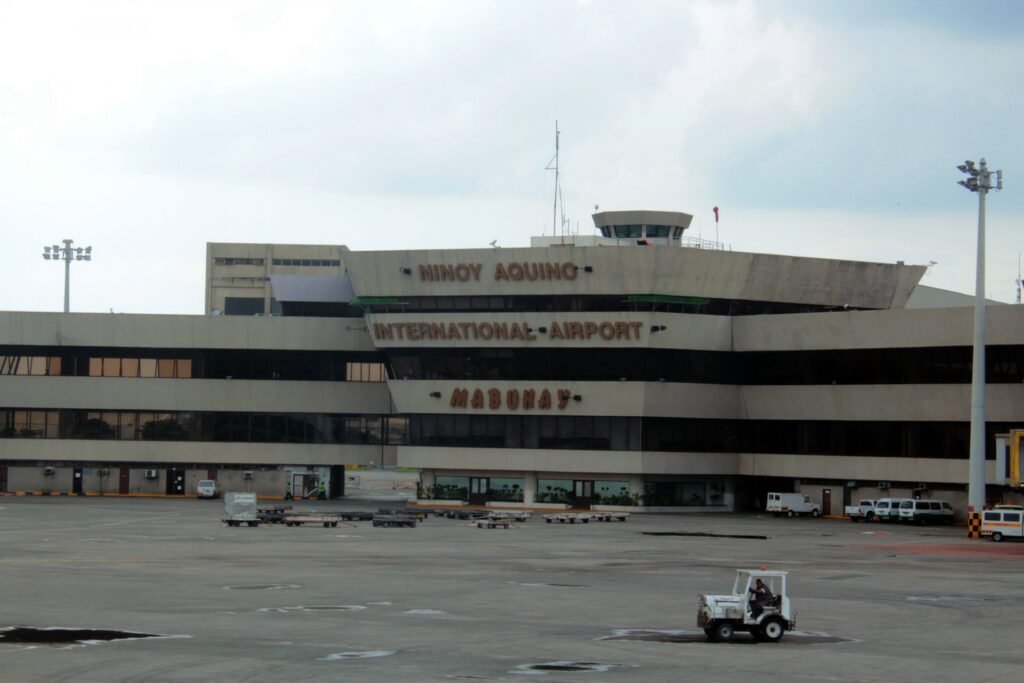
Transferring between terminals
This is the single most common way people miss flights in Manila, and it is entirely avoidable.
NAIA’s terminals are not connected airside. There is no secure walkway or train between them. A transfer means clearing arrivals, collecting your bags, leaving the building, travelling on public roads to another terminal, and checking in from scratch. An inter-terminal shuttle operates for passengers, and taxis and ride-hailing also work.
The distance is short. The traffic is not. Metro Manila congestion is the variable that ruins connections, and the airport road is not immune to it.
- Book separate tickets as separate trips. If your international arrival and your domestic departure are on different bookings, nobody is responsible for you if the first runs late.
- Allow far more time than feels sensible for a terminal change, especially into a domestic flight with a strict check-in cut-off.
- Consider an overnight in Manila rather than a tight same-day connection. It is often cheaper than rebooking a missed domestic flight.
- Confirm both terminals before you leave home, not at the taxi rank.
Arriving: what happens and what to have ready
NAIA sits between Pasay and Parañaque, around 7 kilometres from Makati and 9 to 10 from Bonifacio Global City, depending on traffic and route.
The Philippines requires an online eTravel registration before arrival and again before departure. It is free and done on the official government portal, and you will be asked for the QR code. Complete it before you fly rather than in the queue. Our planning checklist covers the paperwork alongside everything else to sort before departure.
Other practicalities:
- Money. Terminals 1 and 3 have the widest range of ATMs and currency services, including the major Philippine banks. Airport exchange rates are rarely the best available, so change what you need to get into the city and no more.
- Connectivity. Have a plan before you land rather than hunting a kiosk at 2am. A travel eSIM installed at home works the moment you switch off aeroplane mode, and it avoids the passport-and-local-address paperwork a Philippine SIM requires. See our Philippines eSIM guide.
- Getting into the city. Ride-hailing and airport taxis both operate. Agree the arrangement before you get in a vehicle, and expect the journey time to be dominated by traffic rather than distance.
Is NAIA still as bad as its reputation?
Its reputation was earned over a long period, and it lags the newer airports in the region. That said, the basics have measurably improved since the operator changed in late 2024: power, air-conditioning, escalators, toilets, Wi-Fi, immigration queuing and shuttle buses have all been worked on, and passenger volumes have risen.
The honest summary for a traveller is that NAIA is now a functional airport with an ongoing reorganisation problem rather than a dysfunctional one. The thing most likely to go wrong for you is not the facilities. It is arriving at the wrong terminal.
Plan the rest of your trip
- Philippines travel planning checklist, everything to sort before you fly
- How to get to El Nido and how to get to Coron, every route after the 2026 change
- How to get to Cebu, the other main gateway
- Palawan travel guide and Cebu travel guide
- Philippines travel budget, what a trip actually costs
Common questions
How many terminals does NAIA have?
Three working passenger terminals. The original Terminal 4 closed on 6 November 2024 and was demolished. A Terminal 5 is planned, and plans for a replacement Terminal 4 were reportedly dropped in August 2026. Guides listing four working terminals are out of date.
Which NAIA terminal do I need?
Check with your airline. Broadly, Terminal 1 handles international flights including AirAsia international, Terminal 2 handles Philippine Airlines and AirAsia domestic, and Terminal 3 handles Cebu Pacific and most foreign full-service carriers. Assignments have changed several times since 2024 and more changes are planned.
Can I walk between NAIA terminals?
No. The terminals are not connected airside. Transferring means leaving the building and travelling on public roads by shuttle, taxi or ride-hailing, then checking in again.
How long should I allow for a connection at NAIA?
Generously, and more again if it involves a terminal change or separate tickets. Metro Manila traffic is the risk, not the distance. For a tight international-to-domestic connection, an overnight in Manila is often cheaper than a missed flight.
Can I fly from Manila to El Nido or Coron?
No. Turboprop flights left NAIA on 29 March 2026: Cebgo and AirSWIFT moved to Clark, and Philippine Airlines moved its Busuanga service to Clark. Puerto Princesa is the only Palawan airport still served by direct Manila jets.
Do I need eTravel for the Philippines?
Yes. Registration is required before arrival and before departure, it is free, and it is done online on the official government portal. Complete it before you travel.
Is Manila airport safe and comfortable now?
Considerably better than its reputation suggests. Facilities have been upgraded since the private operator took over in September 2024. The most common problem for travellers is now terminal confusion rather than the buildings themselves.
Sources we checked
Sources we checked: the March and April 2026 terminal reassignments were reported by the airport operator in its own advisories and covered by the Philippine Daily Inquirer, Philstar, BusinessWorld, GMA News and ch-aviation, all of which agree on the carriers and dates. The NNIC concession terms and the Terminal 4 and 5 plans come from the same reporting. The turboprop phase-out follows the Department of Transportation’s Manila Slot Coordination Committee ruling and matches Cebu Pacific’s own transfer advisory. The August 2026 report that the new Terminal 4 has been dropped comes from Philstar and was not yet confirmed by the regulator. AirAsia’s terminal split is from AirAsia’s own announcement, and the old Terminal 4’s closure and demolition from GMA News. For live terminal and flight information, use the operator’s site at newnaia.com.ph and confirm with your airline.